

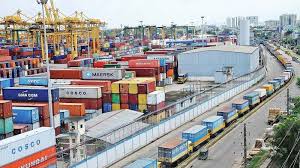
As the principal gateway for Bangladesh’s international trade, Chattogram Port handles more than 90 percent of the country’s import and export activities. Thousands of containers and massive volumes of cargo move through the port every day, making it one of the most critical pillars of the national economy. However, despite its strategic importance, the port has increasingly come under scrutiny over allegations of irregularities, lack of transparency, and controversial administrative decisions. In many cases, irregular practices appear to have become institutionalized.
Recent controversies surrounding land leases, terminal development projects, container transportation contracts, and procurement processes have raised serious questions about governance at the port. Amid these allegations, the Anti-Corruption Commission (ACC) has launched an inquiry into Chattogram Port Authority Chairman Rear Admiral M. Moniruzzaman.
Land Leases Without Competitive Tender
One of the most serious allegations against the port authority concerns the leasing of land and facilities without following standard tender procedures.
A notable example involves the temporary lease of 24 percent of a plot located in the Sujakathgor area of Chattogram’s Kotwali zone. According to available information, an applicant named Subrata Mohajan failed to secure the lease in early 2024. However, after the current chairman assumed office, he reapplied on September 23, 2024.
The application included Mostafizur Rahman, a yarn trader, as a partner. The application claimed that the applicants had long been involved in importing and supplying food grains, including wheat, lentils, corn, and chickpeas. Critics argue that the information presented did not accurately reflect the applicants’ business backgrounds.
The lease was reportedly approved within just six days of the application being submitted. The matter became more controversial when documents indicated that the allocation had been made following instructions from the then Shipping Adviser. However, officials from the adviser’s office later stated that he had no knowledge of the matter.
Controversy Over New Terminal Development
Another major controversy involves the leasing of land for the construction of a new terminal.
Although the project was not included in the port’s long-term development plan, a private company was granted a 20-year lease on 10.66 acres of land. The most contentious issue was that 3.66 acres were reportedly allocated without any competitive bidding process.
In addition, the company was granted a two-year grace period, raising further concerns about preferential treatment. Following media reports highlighting the issue, the port authority announced the cancellation of the tenderless portion of the lease.
Subsequently, a lease agreement for seven acres was signed with Transmarine Logistics Limited, a subsidiary of MGH Group. However, the deal was challenged in court by Vertex Offdock Logistics Services Limited, a competing bidder.
The petitioner alleged that the selected company lacked prior experience in terminal operations and that the leasing process violated established rules and regulations. The High Court later issued a rule seeking explanations from the concerned authorities.
Leasing of Disputed Land
Questions have also been raised over the leasing of land whose ownership remains under legal dispute.
A parcel of land in the Firingi Bazar area has long been the subject of a legal dispute between the Chattogram Port Authority and the district administration. Despite the ongoing court case, the land was reportedly leased temporarily to the Chattogram City Corporation without a tender process.
The city corporation subsequently initiated efforts to sublease the property to a third party on a long-term basis. After the issue became public, the port authority canceled the lease. However, correspondence between the two institutions regarding the return of lease payments continues, further highlighting concerns over administrative transparency.
Container Transportation Without Open Bidding
The transportation of empty containers is a vital component of port operations. After imported goods are unloaded, containers must be transferred to designated yards.
Allegations have emerged that this work has been carried out for years by a specific company without an open tender process. Sources indicate that the contract was awarded through the Direct Procurement Method (DPM).
The company involved argues that operational complexities prevented the port authority from holding a competitive tender. Critics, however, contend that awarding such a significant contract without competition undermines transparency, accountability, and fair market practices.
ACC Investigation Into Port Chairman
The Anti-Corruption Commission has initiated an investigation into multiple allegations against Rear Admiral M. Moniruzzaman.
The accusations include irregularities in project implementation, questionable recruitment practices, misuse of public funds, and the acquisition of assets abroad. A four-member investigation committee has already been formed to examine the allegations.
The ACC has also requested information from the National Board of Revenue and several other agencies as part of its inquiry. Further legal action will depend on the findings of the investigation.
Alleged Financial Irregularities in Ship Purchases and Oil Transport Contracts
Some allegations against the chairman stem from his tenure at Bangladesh Shipping Corporation (BSC).
According to the allegations, a project initially approved for the purchase of six vessels at a cost of approximately Tk 2,486 crore ultimately resulted in the acquisition of only four ships. Critics claim that this discrepancy may have involved financial irregularities amounting to hundreds of crores of taka.
Additional allegations concern crude oil transportation agreements, under which payments were reportedly made at rates $30 to $40 per metric ton higher than prevailing international market prices.
A Strategic Economic Hub
According to the latest financial report, Chattogram Port generated more than Tk 5,460 crore in revenue during the 2025 calendar year. During the same period, the port handled over 3.4 million TEUs (Twenty-foot Equivalent Units) of containers and approximately 138 million tons of cargo.
On average, between 7,000 and 8,000 containers are processed daily. Given the scale of operations, even minor irregularities can have significant consequences for the national economy.
Growing Calls for Accountability
Port officials have so far failed to provide satisfactory explanations regarding many of the allegations. In several cases, responsible officials claimed to have limited knowledge of the matters in question. Efforts to obtain direct comments from the port chairman have also been unsuccessful.
Meanwhile, the Ministry of Shipping has assured the public that no individual involved in irregularities—whether related to land management or any other aspect of port operations—will be spared from accountability.
Experts argue that ensuring transparency, good governance, and institutional accountability at Chattogram Port is essential for safeguarding Bangladesh’s economic interests. Without meaningful reforms, allegations of corruption and mismanagement could undermine not only the efficiency of the port but also the country’s broader economic growth prospects.
As Bangladesh’s most important maritime gateway, Chattogram Port cannot afford to operate under a cloud of controversy. A thorough, impartial investigation and decisive action against any wrongdoing are now essential to restoring public confidence in one of the nation’s most strategic institutions.