

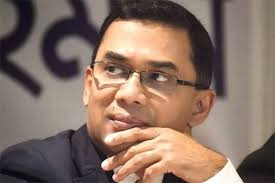
Among the political figures who remained at the center of Bangladesh’s political discourse despite living abroad for a prolonged period, Tarique Rahman stands out prominently. Although he spent more than a decade outside the country, Tarique Rahman—now Chairman of the Bangladesh Nationalist Party (BNP)—continued to play an active and influential role in shaping party strategy, organizational decisions, and political direction.
His return to Bangladesh in late 2025, followed by his formal assumption of the party chairmanship in early 2026, marked not merely a leadership change within the BNP but the beginning of a new chapter in the country’s opposition politics. After years of political struggle, legal battles, exile, and an evolving political landscape, Tarique Rahman has re-emerged as one of the most discussed figures in contemporary Bangladeshi politics. His return has revitalized the BNP while simultaneously reshaping the broader political equation.
Family Background and Political Legacy
Tarique Rahman was born on November 20, 1965. He is the eldest son of Shaheed Ziaur Rahman—Bangladesh’s declaration-of-independence leader, sector commander, and former president—and former Prime Minister Begum Khaleda Zia. Raised in a family deeply rooted in the country’s independence history and democratic struggles, politics was a natural inheritance for him.
However, beyond his family identity, Tarique Rahman gradually established his own position through organizational skills, political acumen, and long-term engagement in party activities. Over time, he progressed through various stages of leadership, proving his capability beyond lineage alone.
Education and Early Life
Tarique Rahman began his education at BAF Shaheen College in Dhaka. After completing his secondary and higher secondary education, he enrolled in the Department of International Relations at the University of Dhaka. Although he did not complete his undergraduate degree and later became involved in the textile and inland shipping businesses, his interest in politics, statecraft, and international affairs remained strong.
His engagement with political theories, development models, and governance systems helped shape his political outlook. Through both formal and informal political practice, he gradually prepared himself for greater leadership responsibilities.
Entry into Active Politics
Tarique Rahman’s political involvement became visible in the early 1990s. During the 1991 general election, he actively participated in nationwide campaigning alongside his mother, Khaleda Zia. This period marked his direct engagement with grassroots politics.
His role became more structured and strategic during the 2001 national election. Following the BNP’s victory, he gained recognition within the party as a promising organizer, particularly for his efforts to strengthen grassroots organizational networks.
In 2002, after assuming the role of Senior Joint Secretary General of the BNP, Tarique Rahman launched extensive nationwide outreach programs. Through direct engagement with district and upazila-level leaders, supervision of affiliated organizations, and organizational restructuring, he gained popularity among younger party activists. During this phase, he emerged not merely as the founder’s son but as a political strategist and organizer in his own right.
Controversies, Legal Cases, and Exile
Following the political changes of 2007, Tarique Rahman was arrested and faced multiple legal cases. He was convicted on charges related to corruption and abuse of power—allegations the BNP has consistently described as politically motivated. Reports of torture during his detention drew the attention of both domestic and international human rights organizations.
After his release in 2008, he traveled to the United Kingdom for advanced medical treatment and remained there for an extended period. While many viewed this phase as political exile, Tarique Rahman continued to play a key role in party policymaking, protest strategies, and international engagement from abroad.
During this period, he introduced modern political strategies, digital communication tools, and expatriate networks, adding a new dimension to BNP’s political operations.
Role in the 2024 Democratic Movement
Although not physically present on the ground, Tarique Rahman played a crucial behind-the-scenes role in the democratic movement of 2024. From abroad, he provided strategic guidance to BNP’s central leadership through virtual meetings, video messages, and organizational directives.
His speeches emphasized peaceful protest, public engagement, and drawing international attention to Bangladesh’s democratic situation. Maintaining the effectiveness of the joint opposition movement and strengthening coordination with other political parties and civil society groups were key elements of his strategy.
Political analysts argue that this movement re-established him as a decisive central leader capable of making critical decisions during times of crisis.
Political Change and Historic Return
Following significant political developments in 2024, court rulings resolved the cases pending against Tarique Rahman, clearing the way for his return to Bangladesh.
On December 25, 2025, he returned to Dhaka with his wife, Dr. Zubaida Rahman, and their daughter, Zaima Rahman. His arrival triggered a massive turnout of party leaders and activists, from the airport to various points across the city. The return injected renewed energy into the BNP and generated widespread enthusiasm among its supporters.
On January 9, 2026, Tarique Rahman officially assumed the role of BNP Chairman, restoring a full leadership structure within the party after a prolonged period.
Active Presence in Electoral Politics
Soon after taking charge, Tarique Rahman became actively involved in electoral politics. He announced his candidacy for the upcoming parliamentary elections from Dhaka-17 and a constituency in Bogura. From January 22, he began campaigning directly for both party and alliance candidates.
His campaign activities in key regions, including Sylhet, drew significant public response. Through a series of meetings with political leaders, business figures, journalists, and working-class citizens, he asserted his presence on the electoral field.
Alongside visits to religious and historical sites, his campaign speeches emphasized economic reform, employment generation, democratic governance, and state restructuring. Observers note a visible shift in his tone—marked by greater restraint, composure, and political maturity.
Many believe he stands a strong chance of winning both constituencies. Political analysts suggest that, much like Begum Khaleda Zia—who never lost an election—Tarique Rahman enjoys strong prospects, supported by a growing wave of public backing.
Personal Life and Family Support
Tarique Rahman married Dr. Zubaida Rahman in 1994. Dr. Zubaida Rahman is a physician and the daughter of former Navy Chief Rear Admiral Mahbub Ali Khan.
Throughout the ups and downs of political and personal life, his wife and daughter have remained steadfast sources of support. During his long years in exile, family remained his primary source of strength.
Tarique Rahman remains a figure of hope for supporters and a subject of controversy for critics. Yet it is undeniable that through prolonged political struggle, legal challenges, exile, and shifting political realities, he has redefined his role in Bangladesh’s political landscape.
Analysts view his current position through three key dimensions: the reorganization of the BNP, active participation in electoral politics, and the articulation of a future vision for the state.
How successful this new chapter will be depends on electoral outcomes, democratic continuity, and the practical application of his leadership. What is certain, however, is that Tarique Rahman’s return has initiated a significant phase in Bangladesh’s political journey—one whose impact will be felt for years to come.