

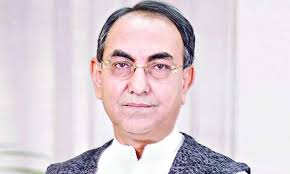
Mirza Abbas, a senior leader of the Bangladesh Nationalist Party (BNP) and a member of its National Standing Committee, is contesting the upcoming national parliamentary election from the key constituency of Dhaka–8. Known for his long political career, strong organizational base, and deep-rooted connection with local residents, many voters in Shahjahanpur and surrounding areas expect him to emerge victorious once again.Conversations with people from various walks of life in the constituency reveal that despite continuous propaganda and criticism against him, Mirza Abbas’s popularity on the ground remains largely intact. Many locals believe that the support and goodwill he enjoys among voters will once again be reflected in the ballot.
Early Life and Family Background
Mirza Abbas, whose full name is Abbas Uddin Ahmed, was born on 7 February 1951 in Dhaka. His father was Abdur Razzak, and his mother Kamala Khatun. Although he was born in Kishoreganj, he grew up in Dhaka’s Shahjahanpur area, where his family has had a long-standing presence.
He belongs to an old landowning family of Dhaka. According to local accounts, his grandfather once owned a substantial amount of land in Shahjahanpur. As a result, Mirza Abbas’s family has maintained historical social, economic, and political ties with the city.
Education and Student Life
Mirza Abbas completed his primary and secondary education at local institutions before enrolling at Nazimuddin Bhuiyan Degree College in 1966. He later earned a Bachelor’s degree in Commerce in 1971 from an institution under the Madanpur area.
From his student days, he was actively involved in organizational and social activities. His interest in politics and public issues during this period eventually shaped his long and eventful political career.
Personal Life
In his personal life, Mirza Abbas married Afroza Abbas on 13 January 1983. Afroza Abbas currently serves as the President of the central committee of the BNP-affiliated Bangladesh Jatiyatabadi Mohila Dal. The couple has two sons and one daughter. Despite a demanding political career, Mirza Abbas is known among close associates for maintaining strong family ties.
Business and Social Contributions
Alongside politics, Mirza Abbas has been involved in business activities. He initially worked with his family business, Mirza Enterprise, and later became associated with the establishment of Dhaka Bank. In 1995, he was appointed as an alternate director of the bank and was promoted to director on 29 March of the same year.
His social contributions include significant involvement in education. In 1980, he founded Mirza Abbas Women’s College in Shahjahanpur to promote female education. The institution has since played an important role in expanding educational opportunities for women in the area.
Political Journey
Following the formation of the Bangladesh Nationalist Party, Mirza Abbas joined the party at the call of late President Ziaur Rahman, becoming one of its early members. During the 1980s, he played an active role in the anti-autocracy movement against the military regime of Hussain Muhammad Ershad, particularly in organizing protests in Dhaka.
His role as an organizer during the 1990 mass uprising further strengthened his position in national politics and within the party.
Parliamentary and Ministerial Roles
Mirza Abbas was first elected to parliament in the fifth national parliamentary election in 1991 from Dhaka–6 as a BNP candidate. He served as State Minister for Youth and Sports from 20 March to 19 May 1991.
Later in 1991, he was appointed Mayor of the undivided Dhaka City Corporation, a position he held until 28 December 1993, during which he undertook several initiatives related to urban management and infrastructure development.
In the controversial sixth parliamentary election held on 15 February 1996, he was again elected as a Member of Parliament and subsequently served as Minister of Land as well as Minister for Housing and Public Works.
He returned to parliament in the eighth national election in 2001 and served as Minister for Housing and Public Works from 11 October 2001 to 27 October 2006. During his tenure, the revised Building Construction Rules of 2006 were enacted, marking a significant development in urban planning and construction regulation.
Electoral Setbacks and Comebacks
Mirza Abbas was unable to contest the 2008 ninth parliamentary election due to legal complications and did not participate in the 2014 tenth election following his party’s decision to boycott. In the 2018 eleventh parliamentary election, he contested from Dhaka–8 but was defeated.
Reputation as a Grassroots Leader
Mirza Abbas is widely regarded as a worker-friendly leader in Dhaka politics. Supporters claim that he commands a large base of loyal activists and sympathizers across the city. His reputation for standing by party workers during difficult times and maintaining close personal contact with grassroots leaders has helped him build a strong organizational network.
Political observers note that his popularity and organizational strength have also made him a target of political opponents. Some analysts believe that rival groups view weakening Mirza Abbas as a way to gain greater influence in Dhaka’s political landscape.
A Lasting Political Presence
With more than five decades of active involvement in politics, Mirza Abbas remains a significant figure in Bangladesh’s political history. His career has seen successes, controversies, setbacks, and comebacks. To supporters, he is a courageous, experienced, and committed leader; to critics, a controversial political figure.
However, there is broad agreement across political lines that Mirza Abbas is an influential and unavoidable name in Dhaka politics, and any serious assessment of the city’s political dynamics is incomplete without considering his role.