

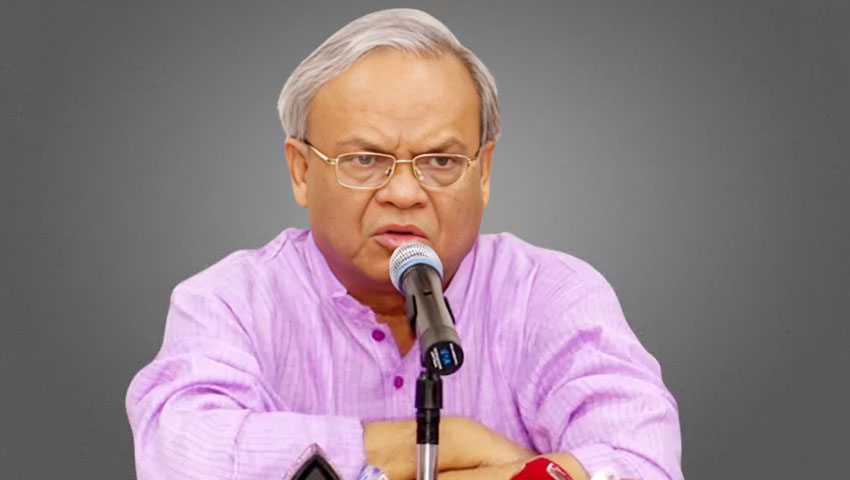
In the political landscape of Bangladesh, there are leaders whose identities are not defined by positions, titles, or the privileges of power. Instead, their true recognition comes from years of struggle, sacrifice, resilience in the face of adversity, and unwavering loyalty to their party. Ruhul Kabir Rizvi is widely regarded by many leaders and activists of the Bangladesh Nationalist Party (BNP) as one such figure who has stood steadfastly by the party during its most challenging times.
Throughout his long political career, he has never served as a minister or as a member of the National Parliament. Opportunities to occupy the center of political power have rarely come his way. Yet, whenever the party has faced crises, political upheavals, or mass movements, Rizvi has consistently been among the leaders at the forefront.
His political journey began through student politics. After completing his higher secondary education, he became involved in a left-wing revolutionary student movement. Later, attracted by nationalist politics, he joined Jatiyatabadi Chhatra Dal (JCD), the student wing of the BNP. He quickly gained prominence as a leader of the Rajshahi University unit of Chhatra Dal and subsequently served as President of the central committee. A significant milestone in his political career came in 1989 when he was elected Vice President (VP) of the Rajshahi University Central Students' Union (RUCSU).
Rizvi's political path has never been easy. According to his supporters, he was seriously injured after being shot during the period of military rule. Many claim that he still suffers from the physical consequences of those injuries. Police crackdowns, arrests, legal cases, and imprisonment became recurring features of his political life as he remained actively engaged in political movements and protests.
Particularly during the last decade and beyond, a period widely viewed by BNP supporters as one of severe political hardship for the party, Rizvi emerged as one of its principal spokespersons. From the party's central office in Paltan, Dhaka, he regularly conducted press briefings, issued statements, and coordinated organizational activities. Many party activists believe that while numerous senior leaders were constrained by legal battles, imprisonment, or political exile, Rizvi played a crucial role in keeping the party's organizational structure functioning at the grassroots level.
Various stories about his role during the BNP's difficult times continue to circulate among party leaders and activists. Supporters claim that when many others distanced themselves due to political pressures, Rizvi remained at the party headquarters and continued to oversee organizational activities. They note that a significant portion of his life has been spent attending court hearings, facing legal challenges, and enduring periods of detention.
Rizvi's personal life has also earned him admiration among grassroots party workers. Many believe that he has consistently placed party responsibilities above personal comfort or the pursuit of power. He has remained actively involved in fundraising efforts, meeting organizational expenses, and maintaining regular communication with party workers and supporters.
His habit of sharing meals with staff members at the party's central office, maintaining a modest lifestyle, and fostering close relationships with grassroots activists is often highlighted as an important aspect of his political character. For this reason, many party workers regard him not merely as a leader but also as a guardian and mentor.
His loyalty to the party has also been widely discussed in political circles. Despite decades of struggle, he has never publicly opposed party decisions. Instead, he has continued to carry out organizational responsibilities while maintaining confidence in the party leadership. His followers believe that he remains deeply committed to upholding the ideals of BNP founder Ziaur Rahman, the leadership of Begum Khaleda Zia, and the political directives of the party's current Chairman, Tarique Rahman.
Political analysts often observe that while many politicians have attained ministerial positions or parliamentary seats, some leaders are remembered primarily for their organizational skills and history of struggle. A large section of the BNP considers Ruhul Kabir Rizvi to be one of those leaders.
Currently, he serves as the Senior Joint Secretary General of the BNP. He is also one of the party's principal spokespersons and carries significant responsibility for overseeing activities at the central office. According to his colleagues, neither political pressures, physical illness, nor personal hardships have been able to keep him away from organizational work.
Bangladesh's political history is filled with stories of sacrifice and struggle. Within that history, many regard Ruhul Kabir Rizvi as a symbol of steadfast dedication—a leader who helped guide his party through some of its most difficult periods while remaining largely outside the spotlight. His supporters believe that he has consistently placed the survival of the party and the welfare of its activists above considerations of power, position, or personal gain.
Political opinions may differ, and assessments of political leaders naturally vary. Nevertheless, in the eyes of his supporters, Ruhul Kabir Rizvi is a politician whose long record of struggle, imprisonment, organizational commitment, and unwavering loyalty has earned him a distinctive place in contemporary Bangladeshi politics. To them, he is more than a political leader; he is a living symbol of sacrifice, perseverance, and political commitment.