

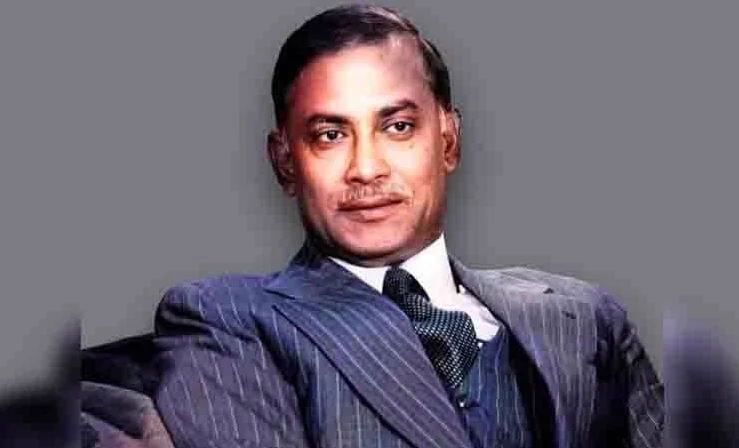
Born on January 19, 1936, in Bagbari of Bogura, amid the gentle chill of winter, drifting clouds and a tranquil, mist-covered sky, Ziaur Rahman emerged in time as one of the most influential figures in Bangladesh’s history. He left a deep and lasting imprint on the political and state structure of independent Bangladesh. He was the proclaimer of independence, a commander of the liberation war, Chief of Army Staff, pioneer of multi-party democracy, and the founding Chairman of the Bangladesh Nationalist Party (BNP). His leadership and statecraft played a decisive role in shaping the country’s political future.
Tomorrow, January 19, marks the 90th birth anniversary of Shaheed President Ziaur Rahman. On this occasion, the nation remembers this great leader with profound respect and gratitude—a visionary, farsighted and immensely popular statesman whose legacy remains immortal in history.
Early Life, Education and Military Career
Ziaur Rahman spent his early childhood in Kolkata. His father, Mansur Rahman, was a scientific officer in the British government. He studied up to seventh grade at the renowned Hare School in Kolkata. Following the partition of the subcontinent in 1947, he moved with his family to Karachi, where he continued his education at D.J. Sindh Government Science College.
In 1953, he joined the Pakistan Military Academy as an officer cadet and received his commission as a second lieutenant in 1955 after completing commando training. He later joined the East Bengal Regiment, where his professional excellence and leadership qualities quickly earned him recognition.
Liberation War and Declaration of Independence
Following the genocide launched by the Pakistani military on March 25, 1971, Ziaur Rahman delivered the historic declaration of Bangladesh’s independence on March 27 from the Kalurghat Radio Station in Chattogram. His announcement inspired the nation to rise up in armed resistance and join the Liberation War.
During the war, he formed and commanded the Z Force and demonstrated exceptional bravery and strategic skill as a sector commander. In recognition of his valour, he was awarded the gallantry title of Bir Uttam.
Assuming the Role of a Statesman
After independence, Ziaur Rahman continued to serve the nation with dedication and responsibility. Amid political instability following the events of 1975, he took a firm stance to restore state stability. Through the November 7 uprising of soldiers and civilians, he was freed and assumed responsibility for running the state.
As President, he abolished the one-party BAKSAL system and restored multi-party democracy. He lifted restrictions on the press and ensured freedom of expression.
On April 21, 1977, he formally assumed the presidency. Later, on June 23, 1978, he was elected President by a landslide victory in a free and competitive election.
Formation of BNP and Political Philosophy
To institutionalize democracy, Ziaur Rahman founded the Bangladesh Nationalist Party (BNP) in 1978 and announced a 19-point program. His political philosophy was built on three core pillars: nationalism, democracy, and development.
Development and Reform Initiatives
During his tenure, a range of initiatives brought significant changes to the country’s socio-economic structure. He prioritized food self-sufficiency by expanding irrigation facilities, promoting multi-crop cultivation, and excavating nearly 900 miles of canals to boost agricultural production.
In 1975, he launched the Self-Reliance Movement from Ulshi village in Jashore and undertook initiatives to transform 68,000 villages into self-reliant units. Through mass education programs, around four million people were brought under literacy coverage.
He strengthened family planning programs, introduced the Gram Sarkar (village government) system, established the Ministry of Youth, and formed the Village Defence Party (VDP) to ensure rural security. To promote women’s empowerment, he established the Ministry of Women’s Affairs.
Foreign Policy and International Role
In foreign policy, Ziaur Rahman pursued a balanced and independent approach. He built strong relations with the United States, China, and the Muslim world. He played a key role in revitalizing the Organisation of Islamic Cooperation (OIC) and was the principal initiator of the South Asian Association for Regional Cooperation (SAARC).
Martyrdom and Legacy
On May 30, 1981, Shaheed President Ziaur Rahman was assassinated in a failed military coup. However, the ideals he left behind—nationalism, democracy, and development—continue to inspire the nation.
After his death, his ideals were carried forward under the leadership of Begum Khaleda Zia, who played a crucial role in the anti-autocracy movement. Later, the leadership of the party was entrusted to Tarique Rahman.
The nation firmly believes that the patriotism, leadership, and democratic vision of Shaheed President Ziaur Rahman will continue to guide Bangladesh toward progress and prosperity in the years to come.