

In an effort to restore democratic governance and rebuild public trust in the state, the government led by Prime Minister Tarique Rahman has undertaken a series of transformative initiatives over the past two months. Within just 60 days of assuming office, the administration has introduced 60 significant measures, which are claimed to have already initiated positive changes across the country’s social, economic, and administrative sectors.
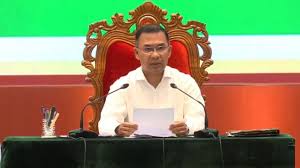
These developments were highlighted at a press conference held শনিবার (April 18) at the Prime Minister’s Office by the Prime Minister’s adviser and spokesperson, Mahdi Amin. The Prime Minister’s Press Secretary, Saleh Shibli, along with other concerned officials, was also present.
According to the briefing, following the end of more than a decade and a half of authoritarian rule, the newly elected government has prioritized transparency, accountability, and people-centered policies from the very beginning. The Prime Minister is reportedly working more than 16 hours a day, while members of the cabinet and officials at all levels of administration are working in unity to advance the nation.
Social Protection and Humanitarian Initiatives
Among the government’s key initiatives is the “Family Card” program, through which 37,567 families are receiving a monthly financial assistance of BDT 2,500. Additionally, the “Farmer Card” has been introduced to provide marginal farmers with access to 10 different benefits. To further support the agricultural sector, loans of up to BDT 10,000 for 1.2 million farmers have been waived, including accrued interest.
To promote religious harmony, monthly allowances have been introduced for imams, muezzins, and priests, alongside the appointment of a special assistant for minority affairs. The government has also taken steps to modernize the zakat system to strengthen poverty alleviation efforts.
Economic and Development Strategy
The government has set an ambitious target of transforming the country into a trillion-dollar economy by 2034, alongside achieving an 8% GDP growth rate by 2030. To attract foreign investment, restrictions on prior approval from the central bank have been relaxed.
Efforts are underway to revive closed industries, including sugar mills, jute mills, and silk factories. Plans have also been adopted to establish university-based industrial ecosystems in high-tech parks and export processing zones (EPZs).
Employment and Expatriate Welfare
A three-phase plan has been initiated to fill 468,000 vacant government positions. At the same time, the reopening of Malaysia’s labor market and the signing of labor agreements with several European countries are expected to expand overseas employment opportunities.
To build a skilled workforce, technical training centers are being modernized. The government has also taken steps to introduce a “Probashi Card” for expatriates.
Reforms in Education and Healthcare
In the education sector, annual re-admission fees have been abolished, and scholarships have been doubled. Students seeking higher education abroad will be eligible for bank guarantees of up to BDT 1 million without collateral.
In healthcare, the government has announced the recruitment of 100,000 new workers, 80% of whom will be women. Digital healthcare services are being strengthened through the introduction of an “e-Health Card,” along with enhanced hospital security measures.
Infrastructure and Technological Development
The government has launched dredging activities covering 20,000 kilometers of rivers and জলাশয় to restore water bodies. The “Padma Barrage Project” has been undertaken to prevent desertification in the northern region.
Plans are also in place to introduce environmentally friendly electric buses in Dhaka, including special “Pink Bus” services for women. Additionally, free internet services are set to be introduced at major airports and on trains.
Administrative Reforms and Good Governance
Significant reforms have been implemented in public administration. VVIP protocols have been minimized to reduce traffic congestion, and austerity measures have been adopted. A landmark decision has been taken to abolish duty-free car and plot privileges for ministers and members of parliament.
Digital land services have been made mandatory, including e-mutation and online land tax payments. Surveillance has been strengthened to combat extortion and corruption.
Environment and Climate Initiatives
To protect the environment, a nationwide program to plant 2.5 billion trees over five years has been launched. Strict legal measures have been introduced against river encroachment, including penalties of up to five years’ imprisonment and substantial fines.
Long-term strategies have also been adopted to address climate change risks in coastal areas.
International Recognition
The government’s initiatives have drawn attention on the global stage. The leadership of Prime Minister Tarique Rahman has reportedly received international recognition, including a place in the list of the world’s 100 most influential people published by Time magazine.
Mahdi Amin stated, “The জনগণ had lost confidence in the state system for a long time. Through transparency, accountability, and effective leadership, the current government has been able to restore that trust.”
While the long-term impact of these 60 initiatives will ultimately be judged by the people, the scale and pace of action within such a short period clearly indicate an active and results-oriented administration.