

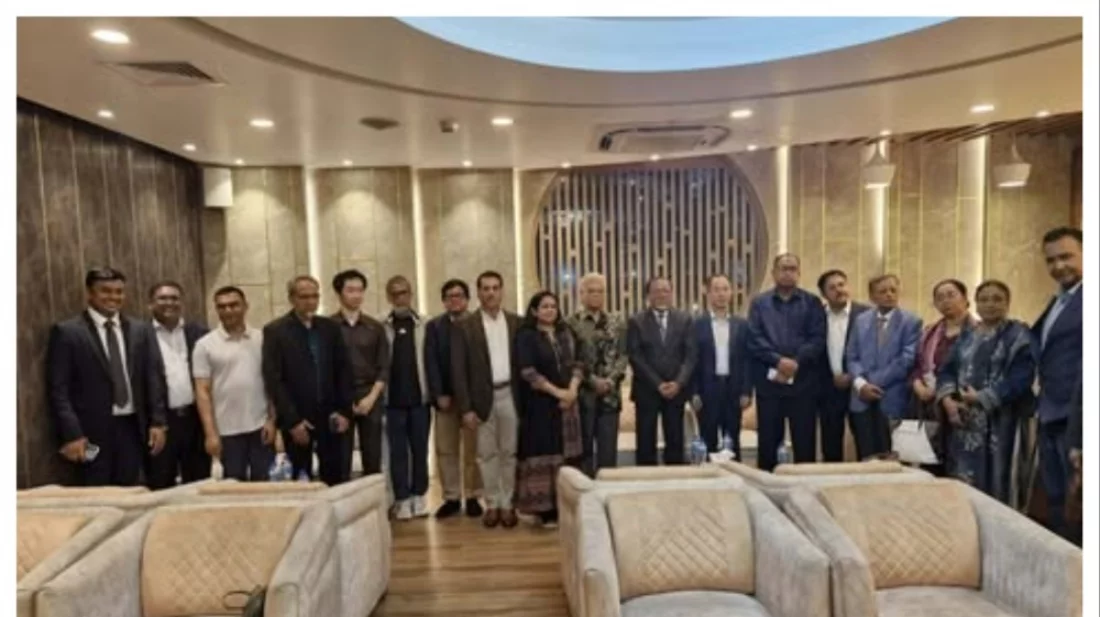
At the invitation of the Chinese government, a delegation from the Bangladesh Nationalist Party (BNP) is currently on an official visit to China. The visit has sparked renewed discussions about internal party dynamics, underlying dissatisfaction, and strategies for maintaining balance within the party. According to political analysts, the tour is not merely diplomatic or ceremonial; rather, it also serves as an important initiative to manage internal party affairs.
The delegation is being led by Ismail Zabiullah, a member of the BNP Chairperson’s Advisory Council. He is accompanied by several prominent leaders from different levels of the party. Among them are former Home Minister Altaf Hossain Chowdhury, Nazmul Haque Nannu, Mohammad Shamsuzzaman Dudu, SM Asaduzzaman Ripon, Baby Naznin, and Khairul Kabir Khokon. Other members of the delegation include Habib un-Nabi Khan Sohel, Ashraf Uddin Ahmed Uzzal, Nilufar Chowdhury Moni, Syed Al Noman, and Mir Solaiman, among others.
The official objectives of the visit include strengthening political ties between the two countries, exchanging experiences, and enhancing BNP’s diplomatic presence on the international stage. However, according to party insiders and political observers, there is another significant factor behind this visit—addressing the long-standing dissatisfaction within the party.
In particular, following the February 12 election, many party leaders have reportedly been experiencing frustration due to not receiving expected recognition or responsibilities. Several leaders feel that their long-standing contributions and political struggles have not been adequately acknowledged. The formation of the new cabinet has further intensified this dissatisfaction, with some expressing their grievances both publicly and privately, creating an uncomfortable situation within the party.
In this context, the large delegation to China is being viewed as a “balancing initiative.” It is believed that the party aims to boost morale, keep leaders engaged, and provide them with a positive and respectable experience through this visit. Such approaches are not uncommon in political parties; when key positions or responsibilities cannot be allocated, alternative forms of recognition and inclusion are often offered.
Another key issue under discussion is the balance among different ideological factions within the party. Some leaders have alleged that right-leaning members are receiving preferential treatment in the cabinet, while those from other ideological backgrounds are being overlooked in decision-making processes. Political analysts warn that such perceptions could pose long-term challenges to party unity.
Observers also believe that the China visit is an attempt to ease these internal divisions. International tours often help strengthen communication among leaders, foster mutual understanding, and reinforce organizational cohesion. At the same time, such visits provide a dignified platform that can enhance the political standing of participating leaders.
However, critics argue that foreign visits alone cannot resolve internal dissatisfaction in the long run. They emphasize that sustainable solutions require transparent evaluation, merit-based distribution of responsibilities, and inclusive leadership. Without these measures, such initiatives may offer only temporary relief rather than addressing the root causes.
Overall, BNP’s visit to China represents not only a step toward strengthening diplomatic relations but also a significant reflection of its internal political dynamics. It is evident that the party is currently employing various strategies to maintain internal balance and keep its leaders satisfied. The effectiveness of these strategies will largely depend on the party’s future decision-making processes and the inclusiveness of its leadership approach.